Foto at top: Borderline case reach (bereik): Estimated distance 150 meter however still an acceptable picture (even some light in eyes bird): Holland migrating Caspian Tern (Reuzenstern) Louersoog. Tripod and sight required to accurately aim camera at remote birds. Z50 Nikkor 500mm f/5.6E PF VR equivalent 1500mm. Such a picture at this distance makes your day!
Ten examples of quantifying reach (bereik) in the field
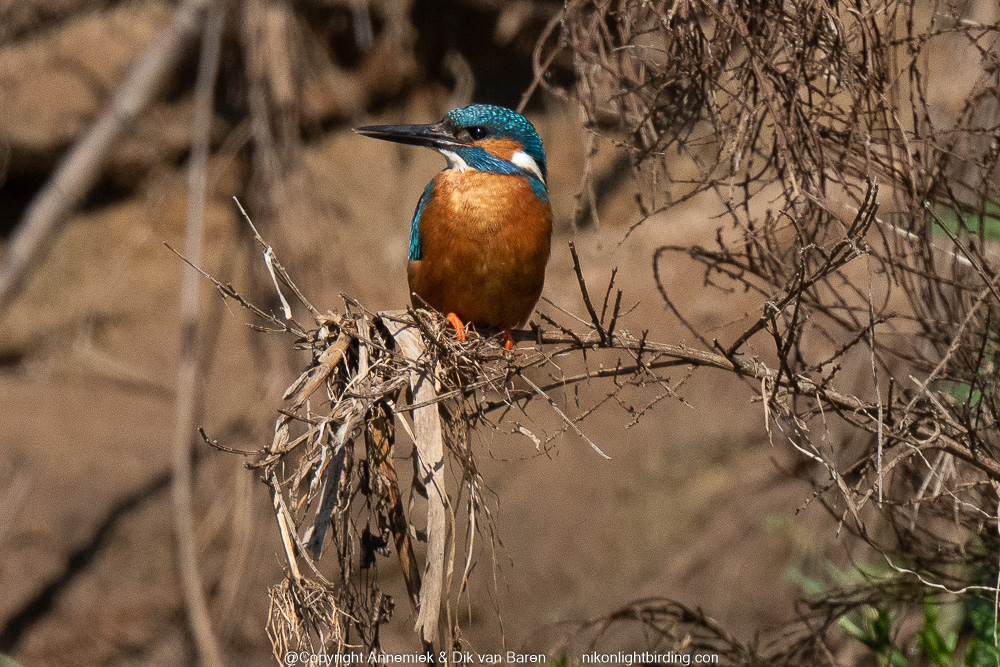
We will illustrate the quantification of reach (bereik) in the following 10 examples. As explained in page Reach, we will compare the actual situation in the field, like these Caspian Terns, with our benchmark picture Kingfisher at 30 meter photographed with D500 Nikkor 300mm f/4E PF VR equivalent 450mm, as shown at page Reach, in our mind. The idea is in any given situation in the field to be able to decide whether we can produce an acceptable picture of the subject bird in the actual circumstances used our atual photographic equipment and its 35mm equivalentss.
In these ten examples we will use different bird species, various distances and amounts of available light and atmosphere. We will also use digiscoping, DSLR, mirrorless camera, full frame camera”s, APS-C type camera’s, short and long lenses and 1.4 and 2.0 converters.
Throughout years of estimating our actual reach in the field, we developed this method of rather accurately estimating actual reach in a given situation. You need these 2 steps:
- Bring back in your mind this the BENCHMARK picture (your or our defined standard of sufficiently resolved detail).
- Perform calculation: actual amount of detail = (size)² x (1/distance)² x (35mm equivalent)² of the amount of detail per square mm in BENCHMARK picture.
In the examples below we will use this method so you can follow and review the estimating, rounding and calculating. This approach has proven to be very effective in the field. We always knew which equipment to use and what our chances were to get acceptable pictures. You do not need to know your actual reach in most situations but rather get a reliable estimate of actual reach so you can decide whether you should add or remove a converter or possibly maybe don’t have any chance to get an acceptable picture in the given situation or whatsoever…
In cases of significantly less or more available light (dark weather, twilight, fog, smoke, snow, sandstorm or exceptionally clean or obviously polluted or vibrating air, we account for an extra maximally 25 percent bonus/malus premium.
Let’s start once more showing our standard reference, our BENCHMARK picture of a Kingfisher at 30m. Thereafter we will compare with this benchmark picture one after one ten example pictures of birds at various distances taken with different equivalents, amounts of available light and conditions of atmosphere.
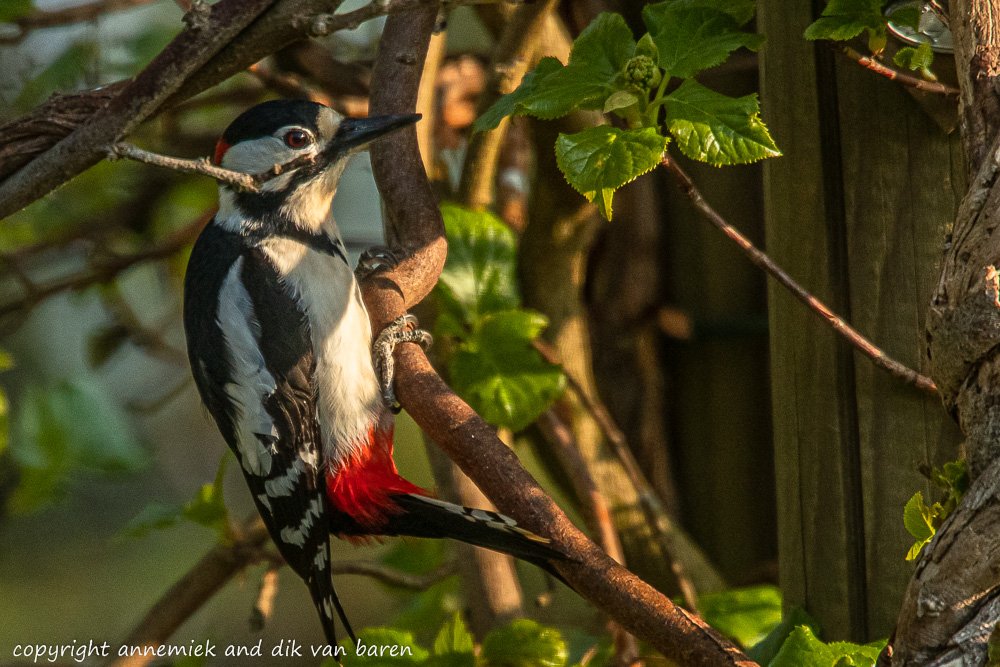
Example 1. Holland Great Spotted Woodpecker (Grote Bonte Specht) measured 10 meter sun D500 Nikkor 300mm f/4E PF VR equivalent 630mm. Compared to BENCHMARK picture:
(22/16 x 30/10 x 630/1050)² => 2.5 x amount detail BENCHMARK picture.
In this example the larger equivalent and the greater size of the Woodpecker are the main factors resulting in far more detail. Sunlight compared to cloudy weather usually improves light and color contrast but does not significantly produce more detail.
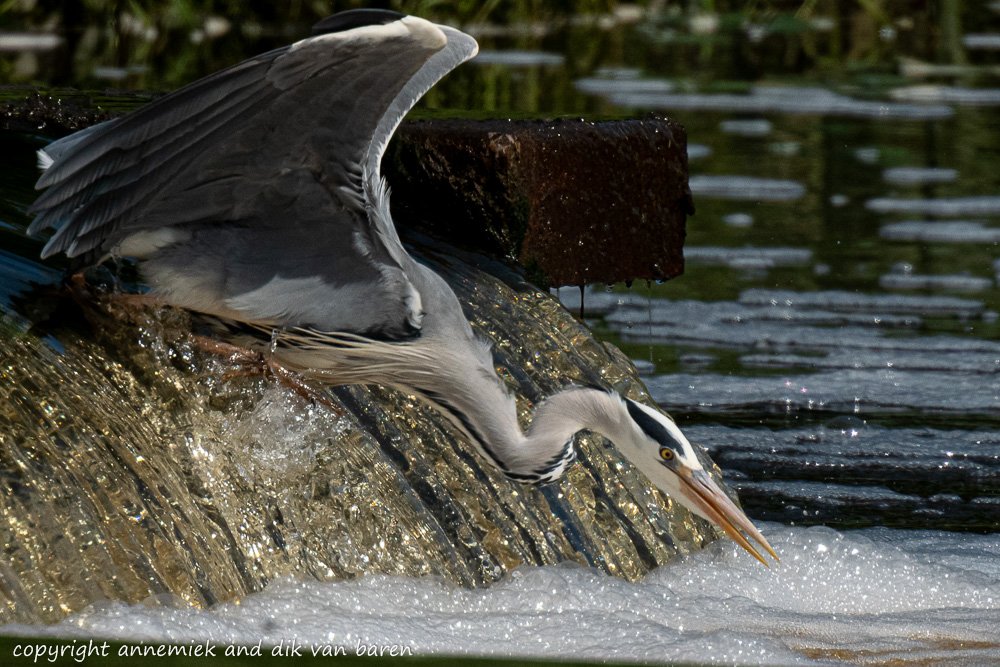
Holland sun Grey Heron (Blauwe Reiger) size 95cm, distance 40m handheld Z50 Nikkor 500mm f/5.6E PF VR equivalent 1500mm. Compared to BENCHMARK picture:
(95/16 x 30/40 x 1500/1050)² => 6.4 x amount of detail BENCHMARK picture.
A distance of 40 meter is absolutely no problem with such a big bird! This action picture is obviously sufficiently detailed. The Heron from head through tail is clearly about 3 times as large as our benchmark-Kingfisher.
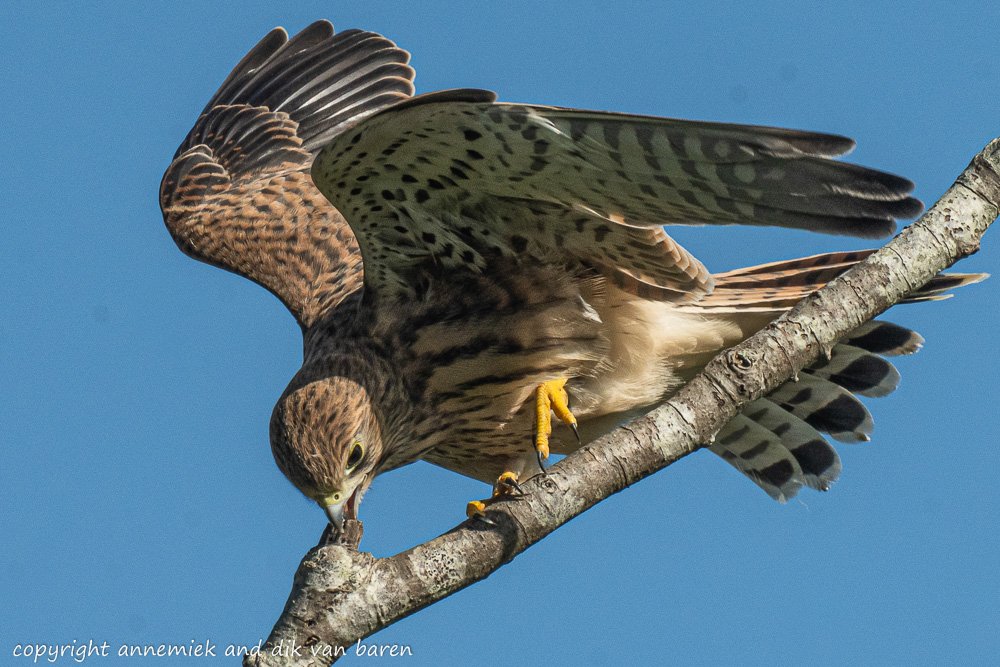
Kestrel (Torenvalk), size 35cm distance 35m, Z50 Nikkor 500mm f/5.6E PF VR equivalent 1500mm. Compared to BENCHMARK picture:
(35/16 x 35/30 x 1500/1050)² => (7/5 x 1/3 x 3)² => 3.9 x amount of detail benchmark picture.
Improved color and contrast due to sun, twice amount of detail due to larger bird and large equivalent.
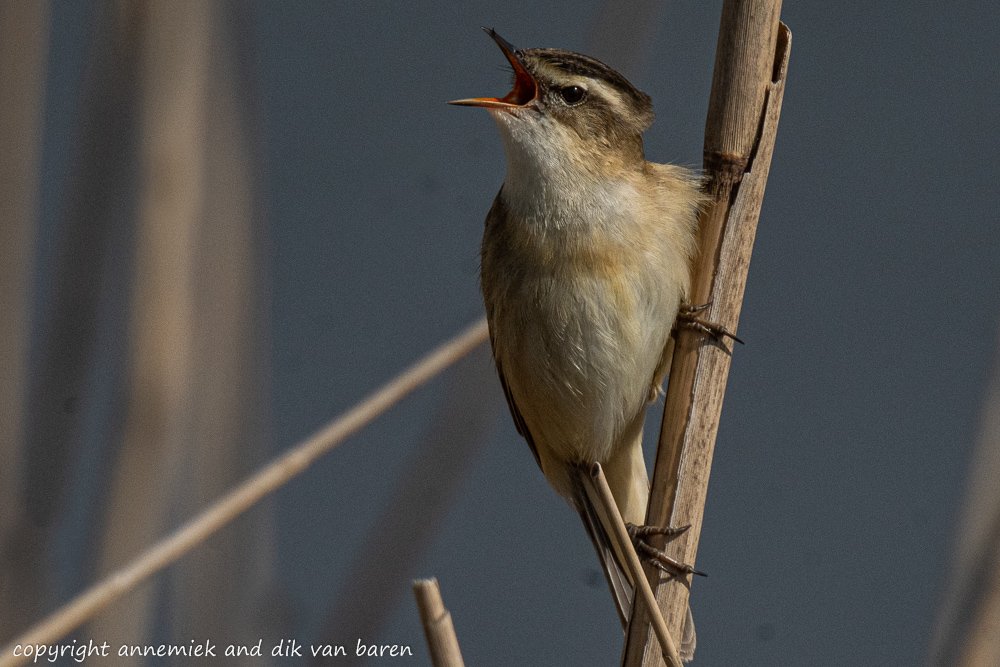
Example 4 Holland sun Sedge Warbler (Rietzanger) size 23cm distance 12m. Z50 Nikkor 500mm f/5.6E PF VR equivalent 1500mm, compared to BENCHMARK picture:
(23/16 x 30/12 x 1500/1050)² => 125% of detail BENCHMARK picture.
Definitely sufficient detail of relatively small active bird. High quality sensor, Lightroom RAW conversion and editing and bright sunlight create contrast and colour depth in overall quiet brownish picture. Strong wind finishing touch.
(16/25 x 10/15 x 1260/450)² => (3/5 x 2/3 x 5/2)² =>100% amount of detail BENCHMARK picture.
Definitely more detail because of shorter distance and a moderately larger equivalent. By the way examples 4 and 5 clearly show that Nikkor 500mm f/5.6E PF VR and Tamron G2 150-600mm f/5.0-6.3, though quite different types of lenses both are semi pro high quality lenses producing rich detail at relatively large distance, ideal for bird photography. The Nikon is a bit lighter and still supports advanced autofocus modes 3D and auto using f/8 at 700mm equivalent (1.4 converter). And although the Tamron cannot match this AF functionality because of its f/9 value with also perfect 1.4 converter, this lens has its extremely useful zoom function. We ended up using both: a luxury, but definitely worth its money.
In the next examples we will show several pictures of Kingfisher (IJsvogel). This bird is an ideal “testbird” active in Holland all year around and breeding March through September. It’s also local in most European and North African countries near fresh water, however sometimes quite shy and difficult to spot and photograph.
@dik del one pic yet so 11 becomes 10:
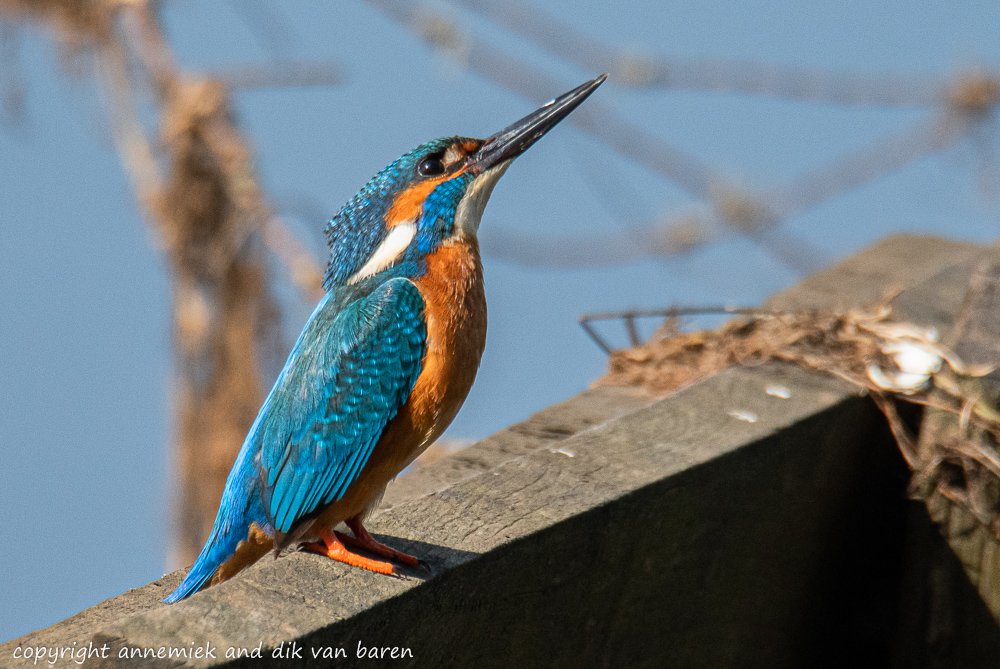
Example 5. Holland sun Kingfisher (IJsvogel) 15 meter handheld D500 Tamron G2 150-150mm f/5.0-6.3 TC X14 substantial camouflage, equivalent 1260mm. Compared to: BENCHMARK picture:
Example 6. Holland Kingfisher (IJsvogel) 18 meter cloudy tripod telescope Swarovski STM80HD 30X Nikon V1 + 1 Nikkor 18.5mm f/1.7 equivalent 1500mm. Compared to BENCHMARK picture:
(16/25 x 10/18 x 1500/450)² => (3/5 x 5/9 x 3/1)² => 100% of detail BENCHMARK picture.
Small bird, high equivalent, extremely dark cloudy winter, but high quality telescope, absolutely great 18.5mm lens and digicompact very suited for digiscoping levelling out.
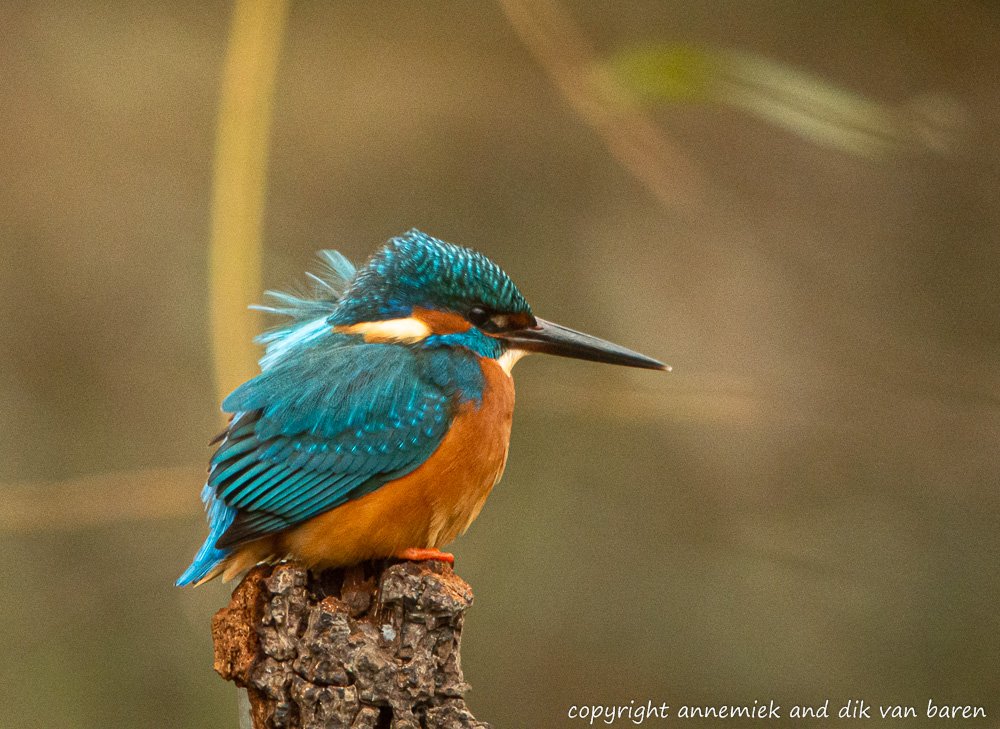
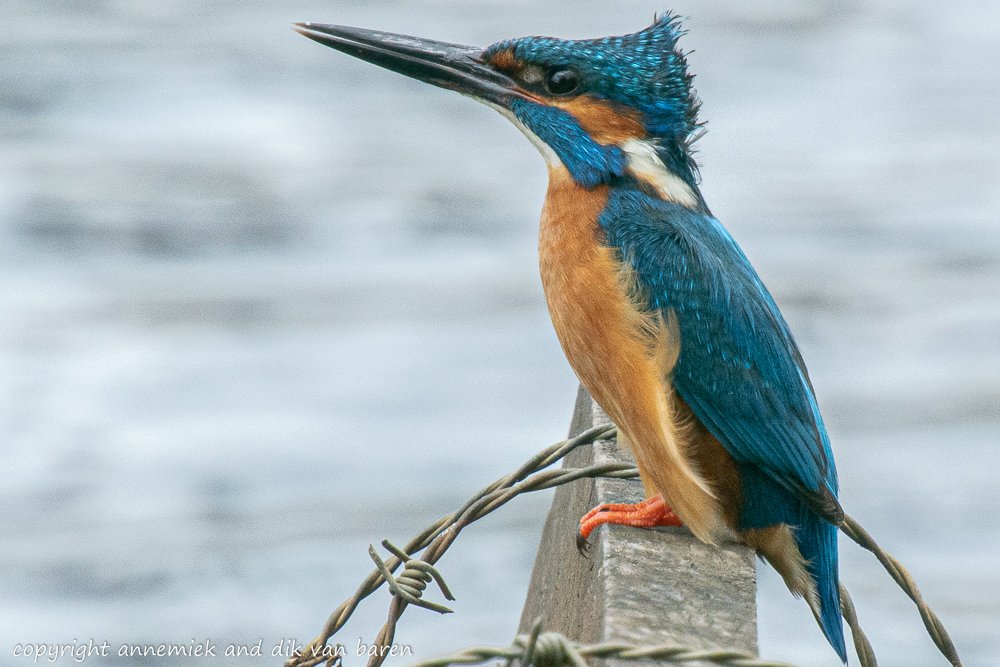
Example 7. Holland Kingfisher (IJsvogel) 21 meter very dark cloudy rainy weather. J5 Nikkor 300mm f/4E PF VR equivalent 1620mm. Compared to BENCHMARK picture:
(16/25 x 10/21 x 1620/450)² => (3/5 x 1/2 x 11/3)² => (33/30)² => 120 qqq % amount BENCHMARK picture.
Great detail thanks to good lens and converter and large equivalent and great quality of Nikon System 1 mirrorless J5 (very small but high quality image sensor). Extremely dark weather yet surprisingly fine detail and image quality. By exception almost as a curiosity we like to show the original picture also:
qqq raw yet qqq
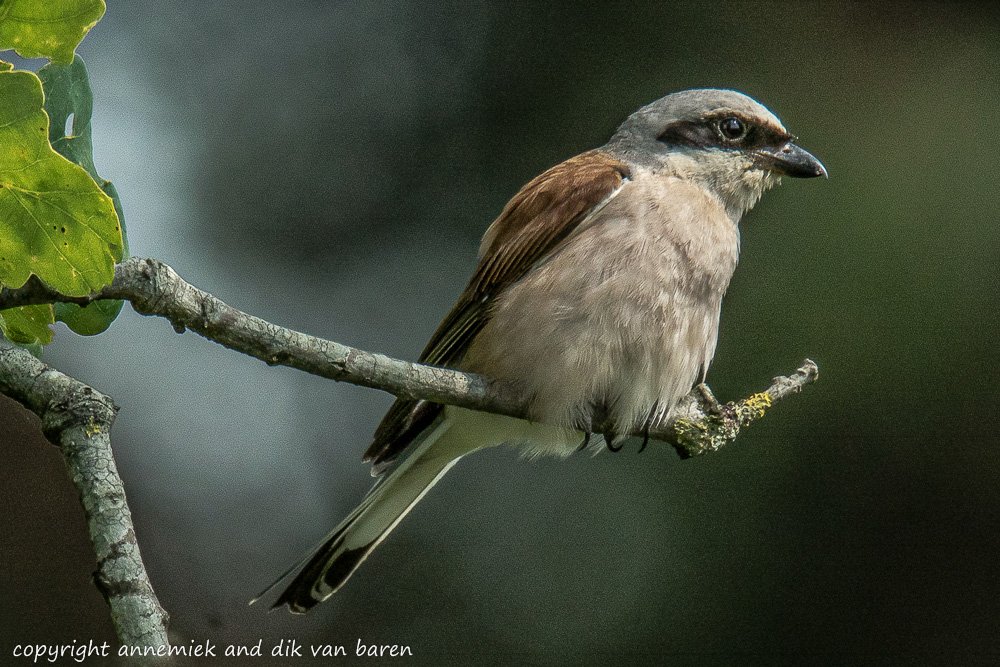
Example 8 Holland Red-backed Shrike (Grauwe Klauwier) 25 meter cloudy. Tripod V3 Sigma Sport 150-600mm f/5.0-6.3 TC 1401 equivalent 2270mm substantial camouflage. Compared to BENCHMARK picture:
(17/25 x 10/25 x 2270/450)² => 150% of detail of BENCHMARK picture.
Wonderful result of great Sigma Sport with high quality 1.4 converter. It also demonstrates that System 1 V3 can produce goodt images with its small sensor (in contradiction to what people may say about System 1). We bought this V3 on the first day it was available and highly appreciated it many years particularly with Nikkor 300mm f/4E PF VR. Later J5 (example picture 8 above this one) took over. Nowadays Z50 is taking over with a 1500mm equivalent and a grown up sensor and clear viewer, ideal for sun/cloudy bird photography (see picture top of page and next picture).
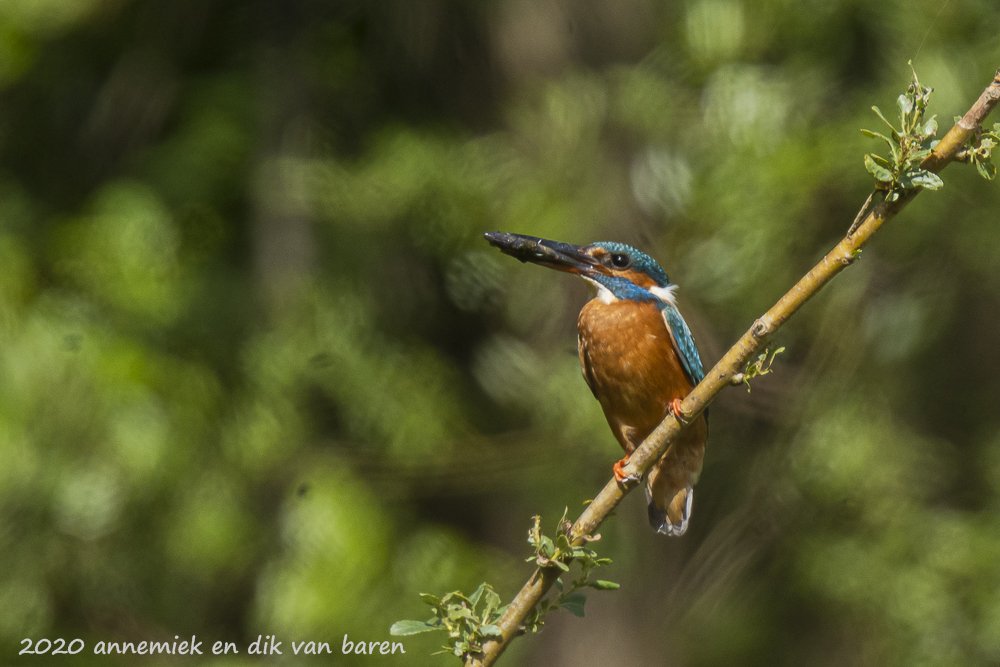
Example 9 Holland cloudy 2000 Kingfisher (IJsvogel) size 22cm 28m Z50 Nikkor 500mm f/5.6E PF VR equivalent 1500mm clean atmosphere. Compared to: BENCHMARK picture:
(16/16 x 10/35 x 1500/1050)² => 60% => 100% amount of detail BENCHMARK picture.
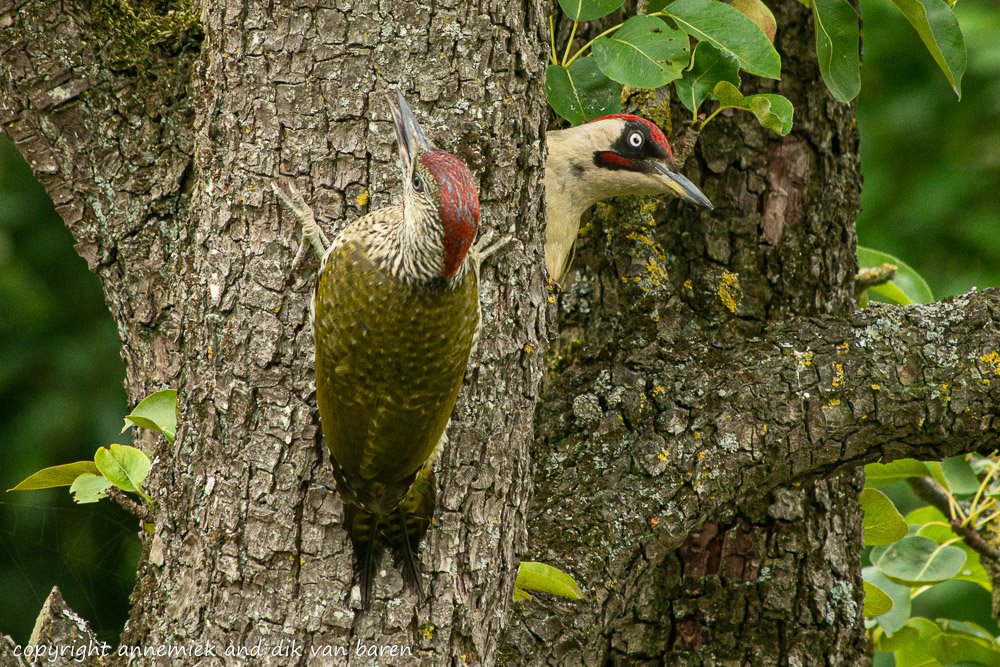
Example 10 Holland Green Woodpecker (Groene Specht) man and juvenile 22 meter cloudy tripod D800 Nikkor 300mm f/4.0D (non VR) equivalent 600mm substantial camouflage.
(200/25 x 10/200 x 1050/450)² => (8/1 x 1/20 x 2/1)² => (4/5)² => 80% detail BENCHMARK picture.
High quality full frame sensor D800 provides not only rich detail but also light and colour contrast in this heavy overcast wheather.
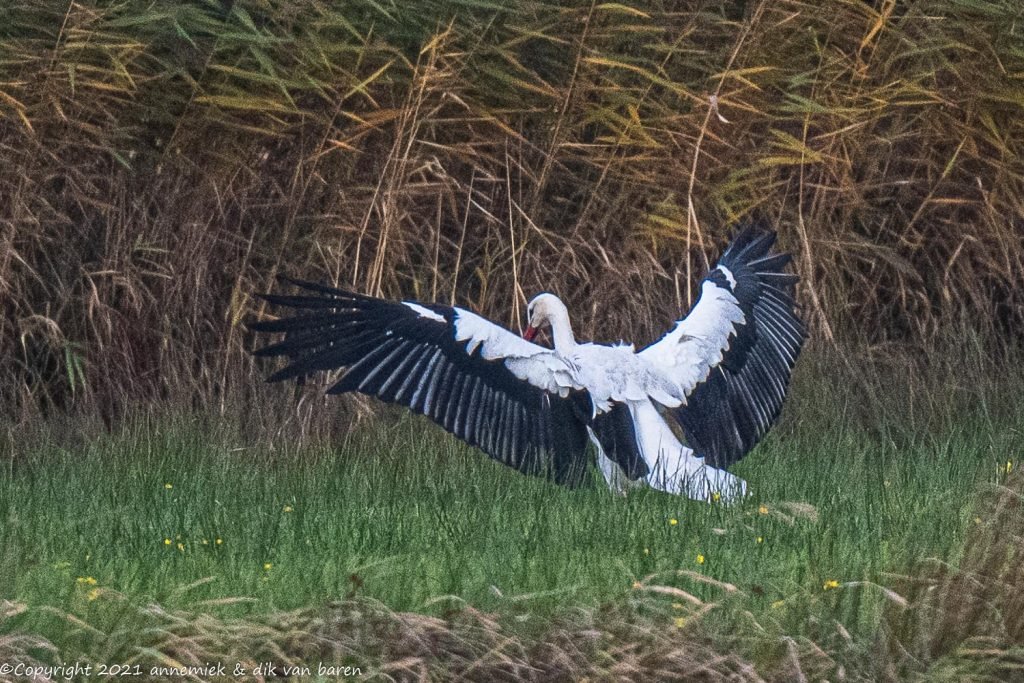
Example 11 Holland White Stork about 200 meter (!) sun handeld D500 Nikkor 500mm f/5.6E PF VR TC-14E equivalent 1050mm standard camouflage.
(200/25 x 10/18 x 600/450)² => (6/5 x 5/9 x 4/3)² => (8/11)² => 55% detail BENCHMARK picture.
Good example of the quadratic arithmetic of our formula: 200 meter distance is more or less cancelled by wingspan 218 cm. In this case we considered wingspan more relevant than size. Notwithstanding 200 meter distance the amount of detail of this lens – in our eyes – is astonishing!
…

Pingback: Recent photos and video clips – nikonlightbirding